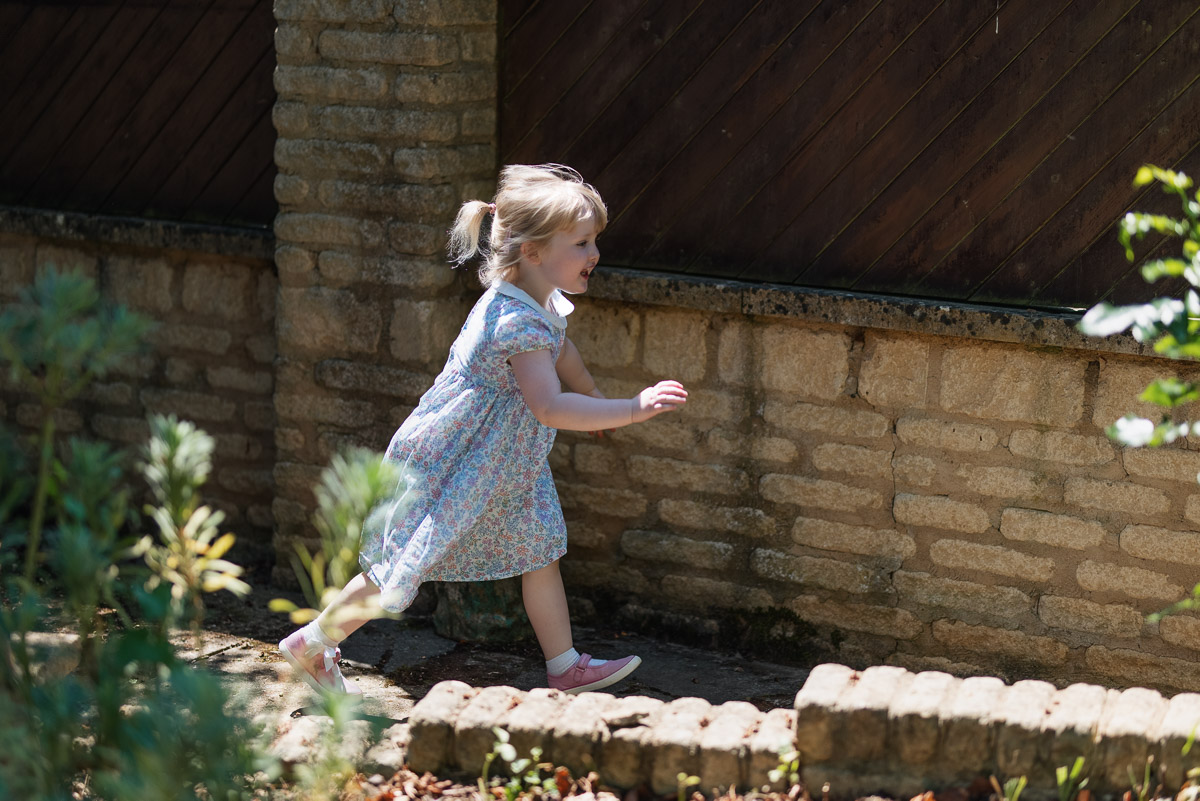

There is something about the late afternoon and evening that seems to bring out a completely different side of some newborns.
During the day, your baby might have fed, slept and cuddled happily. Then, as the evening approaches, suddenly nothing seems to work.
They cry.
You feed them. You change them. You cuddle them. You walk around the house with them. You rock them. You try feeding them again.
And still they cry.
Many parents know this period as the “witching hour” – although sometimes an hour seems like a rather optimistic description!

We called it the witching hour too
We experienced this with both of our children. With our first, the evenings could be incredibly stressful. We had no idea what was wrong and, like most new parents, we desperately wanted to fix it. Our solution was to divide up the night. From around 8pm until midnight, it was usually Ian’s shift. The plan was that Pamila could get some uninterrupted sleep while Ian took care of the baby.
It was a good plan in theory. But there were plenty of evenings when Ian simply felt helpless. We could feed the baby. We could cuddle them. We could walk around with them. We could try everything we knew. Sometimes nothing made any difference. Eventually, Ian would reach the point where he didn’t know what else to do and would have to wake Pamila up for support. And that was difficult.
When your baby is crying and you can’t work out why, it is very easy to start wondering whether you’re doing something wrong.
Are they hungry?
Are they tired?
Are they uncomfortable?
Are they in pain?
Why can’t I settle my own baby?
These are not easy thoughts to have at the end of a long day when you’re already exhausted.

The strange thing about being newborn photographers
There was another reason this was particularly frustrating for us. We are specialist newborn photographers. We have spent years around babies. We know that newborns need to be handled gently. We understand their cues. We know when a baby needs feeding, when they need a cuddle and when it is time to stop taking photographs and simply let them settle. But none of that prepares you completely for having your own baby crying in your arms at 10pm.
There is a huge difference between being confident around other people’s newborns and being a tired parent wondering why your own baby won’t stop crying. With our first child, we didn’t really understand what was happening. With our second daughter, we had something we hadn’t had the first time around.
Experience.
And, as we later discovered, there is also some fascinating research that offers one possible explanation for why those difficult evenings happen.

Why do babies cry more in the evening?
The truth is that we still don’t completely know why some babies develop colic or become particularly unsettled in the evening. Infantile colic is generally considered a self-limiting condition, but its causes are still not fully understood. Researchers have proposed a number of possible explanations, including gastrointestinal, neurological and circadian factors. One theory that particularly caught our attention involves two hormones: serotonin and melatonin. Serotonin is involved in many processes throughout the body, including the digestive system and intestinal movement. Melatonin is best known for its role in regulating our sleep-wake cycle and is closely connected with the body’s circadian rhythm – our internal body clock.
And this is where things get interesting.
Could a baby’s developing body clock play a part?
Newborn babies don’t arrive with the fully developed day-and-night rhythm that adults have. Their circadian system develops during the first months of life, including the development of the body’s own rhythm of melatonin production. A 2024 systematic review of research into infant melatonin found that the ability of the pineal gland to produce and release melatonin rhythmically develops after birth rather than being fully established from the beginning.
Back in 1992, researchers L. and Marc Weissbluth proposed an interesting theory connecting this developing rhythm with infant colic. Their hypothesis was that serotonin and melatonin have opposing effects on intestinal smooth muscle. They suggested that serotonin-related intestinal contractions may be more prominent in the first three months of life, before a baby’s own circadian melatonin rhythm has developed. In other words, they proposed that part of the reason babies can experience more intestinal discomfort and crying in the evening may be connected to the fact that their body clock is still developing. You can read the original research paper here: Infant colic: The effect of serotonin and melatonin circadian rhythms on the intestinal smooth muscle.

But it’s important to say that this is a theory
This isn’t a proven explanation for colic. The Weissbluth paper was published as a hypothesis, and infant colic is still not completely understood. More recent research has continued to investigate the relationship between circadian rhythms, melatonin and colic, but there isn’t a single accepted explanation for why some babies experience these difficult periods. For us, though, discovering this theory was fascinating because it offered something we hadn’t had with our first baby:
a possible explanation that didn’t involve us doing something wrong.
Three months seemed like a long way away
When you’re exhausted and your baby is crying every evening, being told that things will get better eventually isn’t always particularly helpful. Three months can sound like an eternity when you’re only a few weeks into parenthood. But there is something reassuring about understanding that your baby is still developing.
Their digestive system is developing.
Their sleep patterns are developing.
Their circadian rhythms are developing.
They are essentially learning how to be outside the womb.
And that perspective helped us enormously with our second child. We could still find the crying difficult. We could still be tired. We could still have evenings when we had no idea what to do. But we were able to look at her differently.
Instead of thinking, “Why can’t we stop this?”, we could think, “This is something she is going through, and it isn’t her fault.”
That small change in perspective made those evenings much easier to cope with.

If you’re in the middle of the witching hour
If you’re reading this while holding a crying baby late at night, we’re not going to pretend that knowing about serotonin and melatonin will suddenly make your baby stop crying! Sadly, it doesn’t work like that. But sometimes understanding what might be happening can make you feel a little less helpless.
Your baby isn’t deliberately giving you a hard time.
You haven’t necessarily done anything wrong.
And you don’t have to find the perfect trick that makes everything better.
Sometimes the best thing you can do is hold them, comfort them and remind yourself that this stage won’t last forever.
Of course, not all crying is colic, and persistent or unusual crying can sometimes be a sign that a baby needs medical attention. If you’re worried about your baby’s crying, or something doesn’t feel right, speak to your midwife, health visitor, GP or another healthcare professional.
What we wish we’d known the first time
Looking back, the biggest thing we wish we’d understood with our first baby was that we didn’t always have to fix the crying. Sometimes we just needed to be there. With our second daughter, we had the benefit of having already experienced those long evenings. We knew that they would eventually pass.
And they did.
The crying became less intense. The evenings became easier. And eventually, those nights that had once seemed to last forever became a distant memory. Of course, every baby is different and there isn’t a magical three-month deadline when everything suddenly changes. But for many parents, those first few months really do represent a period of enormous change. And sometimes it helps to remember that your baby is changing too.

From our family to yours
Perhaps our experience is one of the reasons we have such a soft spot for newborn photography. We spend our working lives around tiny babies, but becoming parents ourselves gave us a completely different understanding of those first few weeks. We know that newborn life isn’t always sleepy cuddles and beautiful photographs.
Sometimes there is crying.
Sometimes there is feeding at 3am.
Sometimes there is a baby who absolutely refuses to sleep when you desperately need them to.
And sometimes there is an exhausted parent walking around the living room at midnight wondering what on earth they’re supposed to do next.
We’ve been there. That’s also why our newborn photography sessions are designed to be relaxed and baby-led. Your baby doesn’t have to perform for the camera. If they need feeding, we stop. If they need a cuddle, we cuddle. If they need a little time to settle, we wait. Because babies don’t always follow the plan. And that’s OK.
Capturing those fleeting first weeks
The difficult nights might not be the moments you think you’ll want to remember.
But the tiny moments in between them are incredibly precious.
The sleepy cuddles.
The tiny fingers.
The yawns.
The little faces.
The way your newborn fits into your arms.
Those first few weeks can feel incredibly long when you’re living them, but somehow they become incredibly short when you look back. That’s why we love newborn photography. We want to give parents photographs that take them back to those tiny, fleeting days – including all the beautiful, imperfect reality that comes with them.
Because one day, that little baby who kept you awake until midnight will be much bigger. And you may find yourself missing those tiny cuddles more than you ever imagined.
Fortunately, four years on, and our little baby still finds her way into our bed at night. And that’s ok, because we know that won’t last forever either